On paper, cheap leads look like a win.
Lower cost per lead.
Higher volume.
Busier dashboards.
But behind the numbers, many businesses feel something else entirely:
Sales teams are overwhelmed.
Conversions are inconsistent.
Revenue isn’t matching effort.
This is the hidden side of chasing cheap leads—and it’s one of the biggest reasons digital growth stalls.
Why Cheap Leads Feel So Attractive
Most businesses are conditioned to optimize for cost efficiency.
When reports show:
-
Lower CPL
-
Higher lead count
-
Improved short-term metrics
…it feels like progress.
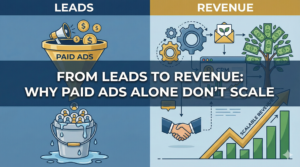
The problem is that CPL is an incomplete metric. It measures how cheaply you can generate interest—not how effectively that interest turns into revenue.
The Real Cost That Doesn’t Show Up on Dashboards
Cheap leads rarely stay cheap.
Here’s where the hidden costs start to surface.
1. Sales Team Burnout
High lead volume with low intent means:
-
Longer qualification calls
-
Repetitive objections
-
Low close rates
Over time, sales teams:
-
Lose motivation
-
Rush conversations
-
Miss genuinely good opportunities
Burnout isn’t just a people issue—it’s a revenue issue.
2. Slower Sales Cycles
Low-quality leads:
-
Need more education
-
Compare on price
-
Delay decisions
This stretches sales cycles, blocks pipeline movement, and creates forecasting uncertainty.
What looked “cheap” at the top becomes expensive in time and effort.
3. Skewed Decision-Making
When volume becomes the goal, businesses start optimizing the wrong things:
-
Broader targeting
-
Generic messaging
-
Softer qualification
This attracts everyone—and converts almost no one.
Over time, teams start believing:
“Digital leads don’t work.”
In reality, unqualified leads don’t work.
4. Poor Customer Experience
Every low-quality lead still experiences your brand.
When prospects:
-
Feel misunderstood
-
Are pushed when they’re not ready
-
Don’t see relevance
Trust erodes before a real conversation even begins.
Growth-driven brands protect their brand experience as much as their metrics.
Why Quality Leads Cost More (And Why That’s a Good Thing)
Higher-quality leads often mean:
-
More specific targeting
-
Stronger messaging
-
Better landing pages
-
Clear qualification filters
This naturally increases CPL.
But it also:
-
Reduces sales effort per deal
-
Improves close rates
-
Increases deal value
-
Shortens sales cycles
What matters isn’t cost per lead—it’s cost per meaningful opportunity.
The Shift Growth-Driven Brands Make
Brands that scale don’t ask:
“How can we get cheaper leads?”
They ask:
“How can we attract fewer—but better—conversations?”
Here’s how that shift plays out.
1. They Design Ads to Filter, Not Attract Everyone
Growth-focused campaigns intentionally:
-
Call out who the offer is not for
-
Use specific language
-
Address price, commitment, or complexity upfront
This reduces volume—but improves intent dramatically.
2. They Use Landing Pages as Qualification Layers
Instead of generic forms, they:
-
Clarify expectations
-
Highlight outcomes (not features)
-
Ask smarter questions
This self-qualifies prospects before sales ever gets involved.
3. They Align Lead Quality With Sales Reality
Marketing and sales agree on:
-
What a “good lead” actually looks like
-
Which signals matter
-
Where nurturing is needed vs direct sales
This alignment prevents friction—and wasted effort.
4. They Track Revenue, Not Just CPL
Their reporting goes beyond:
-
Leads generated
They track:
-
Lead-to-opportunity rate
-
Opportunity-to-close rate
-
Revenue per lead source
This clarity changes how decisions are made.
Why Quantity-First Growth Always Plateaus
You can scale volume quickly.
You can’t scale inefficiency forever.
At some point:
-
Sales capacity maxes out
-
Brand perception weakens
-
Costs rise faster than returns
Quality-first systems scale more slowly at first—but compound over time.
Where GPD’s Perspective Fits In
At GoProDigitally, lead generation is never treated as a numbers game.
The focus is on:
-
Designing funnels that respect sales capacity
-
Attracting intent, not just interest
-
Building systems where marketing and revenue move together
Because growth isn’t about filling spreadsheets.
It’s about building predictable, profitable pipelines.
A Simple Question to Reframe Your Growth
Ask yourself:
“If we cut our leads by 30% but doubled our close rate—would growth improve?”
For most businesses, the answer is yes.
That’s the power of quality.