Running paid ads has never been easier.
Pick a platform.
Set a budget.
Launch a campaign.
Watch leads come in.
Yet across industries—startups, real estate, B2B, D2C—the story sounds eerily similar:
“We’re getting leads… but revenue isn’t growing the way it should.”
This is where many businesses feel stuck. They increase ad spend, change creatives, or switch agencies—hoping the next tweak will unlock growth.
But here’s the uncomfortable truth:
Paid ads don’t scale businesses. Systems do.
The Paid Ads Trap Most Businesses Fall Into
Paid ads are powerful. But they’re also misleading.
When ads start generating leads, businesses assume they’ve solved their growth problem. In reality, they’ve only solved traffic acquisition—one small piece of a much larger puzzle.
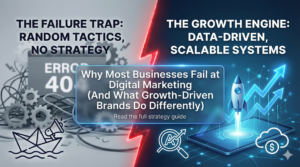
This creates what we call the Paid Ads Trap:
-
Leads are coming in
-
Dashboards look active
-
Costs are being optimized
-
But revenue stays inconsistent
The issue isn’t the ads.
It’s everything around the ads.
Where Leads Actually Die (And Nobody Notices)
Most businesses focus heavily on:
-
Cost per click (CPC)
-
Cost per lead (CPL)
-
Impressions and reach
But leads don’t convert—or fail—at the ad level. They fail after the click.
Let’s break down the common leakage points.
1. The Landing Page Disconnect
A prospect clicks an ad with a clear promise.
They land on a page that’s generic, confusing, or cluttered.
Common problems:
-
Weak or unclear messaging
-
No differentiation
-
Too many CTAs
-
No trust signals
When the landing experience doesn’t match the ad’s intent, conversions drop—even if traffic quality is high.
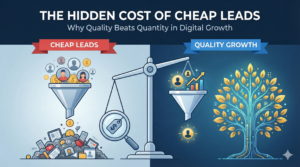
2. Lead Quality vs Lead Quantity Confusion
Many campaigns are optimized for volume because it “looks good.”
But high lead volume often means:
-
Low intent users
-
Price shoppers
-
Unqualified inquiries
-
Sales team burnout
Growth-driven brands optimize for qualified actions, not raw numbers.
3. No Clear Funnel Between Lead and Sale
What happens after the lead comes in?
For many businesses:
-
No structured follow-up
-
Delayed callbacks
-
Generic sales conversations
-
No nurturing for non-ready leads
Without a defined middle funnel, even good leads quietly disappear.
4. Ads Working in Isolation
Ads are often treated as a standalone task:
“Just run campaigns and get leads.”
But ads don’t exist in isolation. They rely on:
-
Messaging clarity
-
Offer positioning
-
Website experience
-
Sales readiness
When these aren’t aligned, scaling ads simply scales inefficiency.
Why Increasing Ad Spend Rarely Fixes the Problem
When results slow down, the default reaction is:
-
Increase budget
-
Launch new creatives
-
Try another platform
Sometimes this works temporarily. Most times, it doesn’t.
Why?
Because spend amplifies the system you already have.
If the system is broken, higher spend just exposes the cracks faster.
What Growth-Focused Brands Do Differently
Businesses that successfully scale with paid ads don’t obsess over ads alone. They build lead-to-revenue systems.
Here’s how their thinking shifts.
1. They Design the Funnel Before Launching Ads
Before running campaigns, they answer:
-
Who exactly is this for?
-
What problem are we solving?
-
What action defines a qualified lead?
Ads are then designed to filter, not attract everyone.
2. They Treat Landing Pages as Conversion Assets
High-performing brands don’t use “one-page-fits-all” designs.
Their landing pages:
-
Speak directly to one audience
-
Address objections early
-
Build trust quickly
-
Guide users to one clear action
This alone can outperform increased ad budgets.
3. They Align Marketing and Sales
Growth doesn’t happen when marketing and sales operate in silos.
Successful teams:
-
Define lead qualification clearly
-
Align follow-up timelines
-
Track conversion beyond the lead stage
-
Improve messaging based on real sales feedback
This feedback loop is where optimization truly happens.
4. They Measure Revenue, Not Just Leads
Instead of asking:
“How many leads did we get?”
They ask:
“How many deals did those leads create?”
Key focus shifts to:
-
Cost per qualified opportunity
-
Conversion rate from lead to sale
-
Revenue generated per campaign
This is where paid ads become scalable.
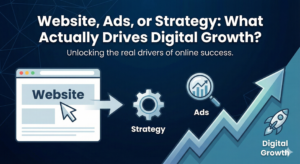
Paid Ads Are a Growth Accelerator—Not a Growth Strategy
Paid ads work best when they amplify something solid underneath.
Without:
-
Clear positioning
-
Strong messaging
-
Conversion-focused pages
-
Structured follow-up
Ads become an expensive experiment instead of a growth engine.
Growth-focused brands don’t run ads hoping they work.
They run ads knowing the system is ready to convert.
Where GPD’s Thinking Fits In
At GoProDigitally, paid ads are never treated as a standalone service.
They’re viewed as:
-
One part of a larger growth system
-
Connected to messaging, landing pages, and revenue goals
-
Optimized for business outcomes, not vanity metrics
Because scaling isn’t about more leads—it’s about better journeys from first click to final decision.
A Question Worth Asking
Before increasing your ad budget, pause and ask:
“If our leads doubled tomorrow, would our system convert them better—or just struggle faster?”
That answer usually reveals the real growth bottleneck.